Yorkshire's Best Free Art Galleries: A Culture Crawl
Yorkshire punches well above its weight when it comes to world-class art, and the best part? Many of its finest galleries won't cost you a penny to visit. Whether you're drawn to contemporary sculpture, Victorian masterpieces, or the bold colours of David Hockney, this guide takes you on a tour of the county's most impressive free galleries -- each one offering something genuinely distinctive.
The Hepworth Wakefield
If you visit just one gallery on this list, make it The Hepworth Wakefield. Designed by David Chipperfield Architects and opened in 2011, this striking building sits on the banks of the River Calder, its angular concrete forms reflecting in the water below. The gallery is named after Dame Barbara Hepworth, one of the twentieth century's most important sculptors, who was born and raised in Wakefield.
The permanent collection is built around 44 plaster and aluminium working models donated by the Hepworth family, giving visitors a rare chance to see the artist's creative process up close. Beyond the Hepworth works, the gallery's 5,000 square metres of purpose-built exhibition space hosts a rolling programme of contemporary art that regularly features major international names.
Outside, don't miss The Hepworth Wakefield Garden, designed by Tom Stuart-Smith. It's a beautifully considered landscape that connects the gallery to the town's historic waterfront. The gallery is open Tuesday to Sunday. Note that general admission is around £13, though entry is free for Wakefield district residents and under-18s.
Salts Mill and the 1853 Gallery, Saltaire
For a truly unique gallery experience, head to Salts Mill in the UNESCO World Heritage village of Saltaire. This enormous former textile mill was built in 1853 by Sir Titus Salt and later rescued from dereliction by the late Jonathan Silver, who purchased it in 1987 and set about transforming it into one of Yorkshire's most remarkable cultural spaces.
The 1853 Gallery on the ground floor houses one of the largest permanent collections of David Hockney's work anywhere in the world. Hockney, born in nearby Bradford, was a close friend of Silver's, and the collection reflects that personal connection. You'll find paintings, prints, photographs, and iPad drawings spanning decades of the artist's career. The gallery regularly rotates which works are on display, so repeat visits are always rewarding.
Beyond the art, Salts Mill is home to independent bookshops, homeware stores, and a rather good cafe. Saltaire village itself, with its neat grid of stone-built terraces, is worth exploring -- it was purpose-built by Salt to house his mill workers and remains remarkably well preserved.
Leeds Art Gallery and the Henry Moore Institute
In the centre of Leeds on The Headrow, you'll find two outstanding galleries side by side. Leeds Art Gallery has been a cornerstone of the city's cultural life since 1888 and houses a superb collection of British and European art from the nineteenth century to the present day. Recent exhibitions have explored themes ranging from women's representation in art across four centuries to connections between Modernist practices in West Cornwall and West Yorkshire.
Next door, the Henry Moore Institute is dedicated to sculpture in all its forms. Named after Henry Moore, born in Castleford near Leeds, who began his training in the city, the institute offers free exhibitions, an extensive sculpture research library, and a fascinating archive. It's open Tuesday to Sunday, 10am to 5pm. The 'Beyond the Visual' exhibition, which ran from late 2025 into spring 2026, was notable as the UK's first major sculpture exhibition in which blind and partially sighted practitioners were central to the curatorial process.
Both galleries are just a few minutes' walk from the Victoria Quarter shopping arcades and the city's main train station, making them easy to work into a day trip.
York Art Gallery and the Centre of Ceramic Art (Not Free, But Worth a Mention)
Unlike the other galleries on this list, York Art Gallery charges an admission fee, so it does not strictly qualify as a free gallery. However, it is well worth including here because the quality of the collection makes the modest entry price excellent value for money.
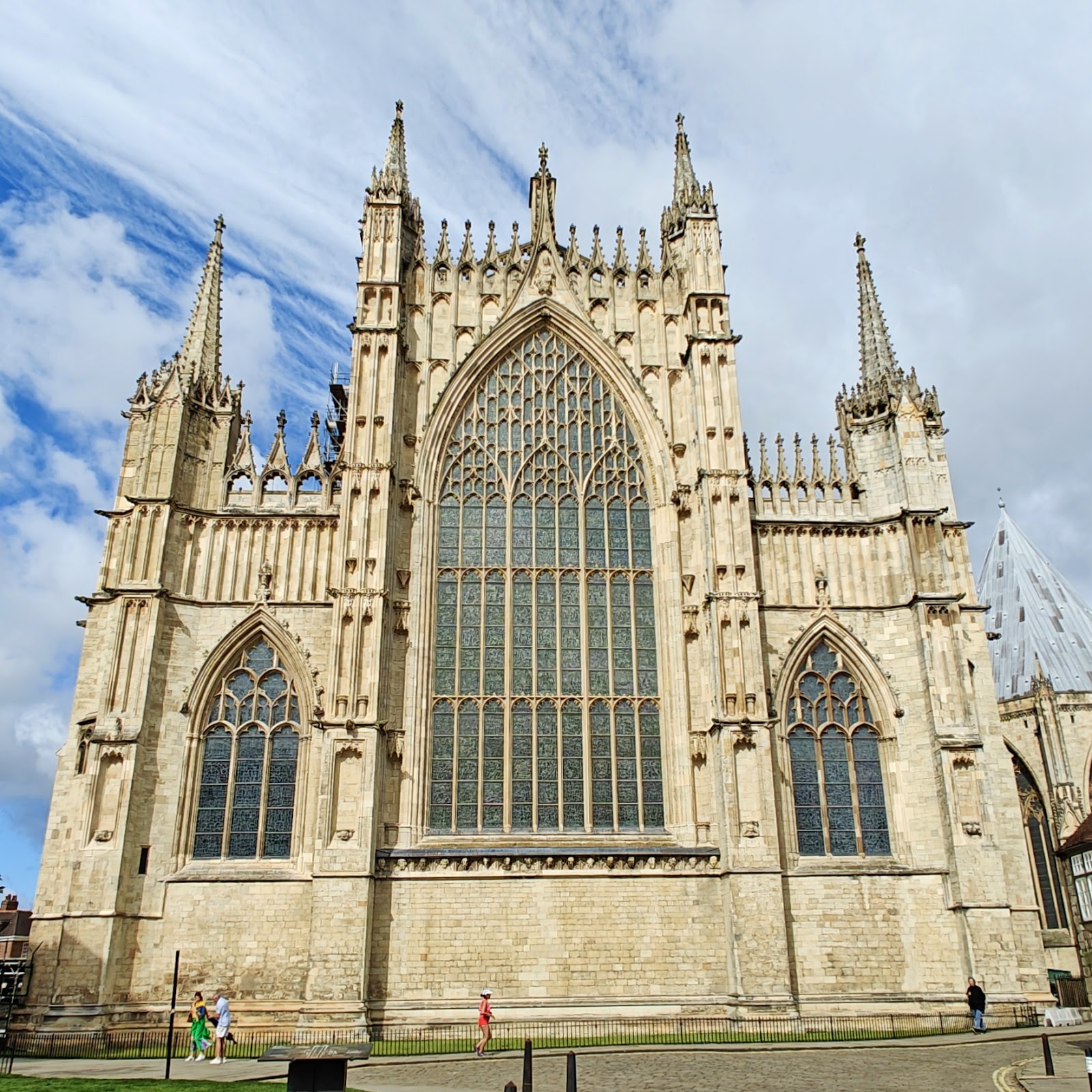
Set in a handsome Italianate building overlooking Exhibition Square, York Art Gallery is home to one of the finest collections of ceramics in the country. The Centre of Ceramic Art (CoCA) occupies two first-floor gallery spaces and draws on a collection of over 5,500 objects by more than 600 artists, charting the development of British studio ceramics from the early twentieth century through to the present day.
The gallery's broader collection spans 600 years of Western European painting, with works ranging from early Italian panels to twentieth-century British art. The building itself was refurbished and reopened in 2015, with a thoughtful redesign that lets natural light flood the upper galleries.
York Art Gallery is part of York Museums Trust. Check the website for current admission prices before visiting. It pairs well with a visit to the nearby Yorkshire Museum in the Museum Gardens, which focuses on archaeology and natural history.
Cartwright Hall Art Gallery, Bradford
Set in the grand surroundings of Lister Park -- one of Bradford's finest public spaces -- Cartwright Hall has been the city's civic art gallery since it opened in 1904. The Baroque-style building is impressive enough from the outside, but inside you'll find a diverse collection spanning nineteenth and twentieth-century British art alongside one of the strongest collections of contemporary South Asian art and crafts in the north of England.
The gallery runs a lively programme of temporary exhibitions alongside its permanent displays. Lister Park itself offers boating lakes, a Mughal Water Garden, and plenty of green space for a post-gallery stroll. Cartwright Hall is free to enter and is about a ten-minute uphill walk from Frizinghall railway station.
Graves Gallery and Millennium Gallery, Sheffield
Sheffield's two main city-centre galleries complement each other nicely. The Graves Gallery, opened in 1934 thanks to a bequest from local businessman John George Graves, sits above the Central Library and houses an impressive collection charting the development of European and British art from the sixteenth century to the present day.
A short walk away, the Millennium Gallery opened in 2001 as part of Sheffield's Heart of the City regeneration project. It brings together touring exhibitions of art and design with the fascinating Ruskin Collection -- a unique assemblage of art, illustrated manuscripts, and minerals gathered by John Ruskin in the 1800s to inspire the working people of Sheffield. Both galleries are free and are within easy walking distance of Sheffield station.
The Mercer Art Gallery, Harrogate
Tucked away on Swan Road, just a hundred yards from the entrance to Harrogate's lovely Valley Gardens, the Mercer Art Gallery occupies a building with an intriguing history. Originally built in 1806 as Harrogate's first spa, the Promenade Rooms were converted into a gallery in 1991.
The permanent collection of over 2,000 items is particularly strong in nineteenth and twentieth-century British art, with works by the great Victorian painter William Powell Frith, the atmospheric Leeds-born artist Atkinson Grimshaw, and twentieth-century figures including Laura Knight and Paul Nash. A diverse programme of temporary exhibitions runs throughout the year, weaving together historic and contemporary art. The gallery is free to enter and open Tuesday to Sunday.
Planning Your Yorkshire Art Trail
The galleries on this list are spread across the county, but many can be grouped together for a satisfying day or weekend trip. The Hepworth Wakefield and Salts Mill are about 40 minutes apart by car. Leeds Art Gallery and the Henry Moore Institute are walkable from Leeds station in ten minutes. Sheffield's galleries are clustered together in the city centre.
If you're using public transport, all the major galleries are well served by rail -- Yorkshire's cities are well connected, and most galleries are within walking distance of their nearest station. The Yorkshire Sculpture Park at West Bretton, while not covered in detail here (as it charges a modest admission charge of around ten pounds per person, with free parking), is another essential stop for sculpture lovers and sits between Wakefield and Barnsley.
Whichever galleries you choose, you'll find that Yorkshire's art scene is thriving, generous, and full of surprises. Happy exploring.
Sources & Useful Links
- The Hepworth Wakefield — David Chipperfield-designed gallery celebrating Barbara Hepworth and contemporary art
- Salts Mill — Home of the 1853 Gallery with one of the largest collections of David Hockney's work
- Leeds Art Gallery — Outstanding British art collection in the heart of Leeds
- Henry Moore Institute — Free sculpture gallery and research centre next to Leeds Art Gallery
- York Art Gallery — Six centuries of painting and the Centre of Ceramic Art (CoCA)
- Cartwright Hall Art Gallery — Bradford's civic gallery in Lister Park with British and South Asian art
- Graves Gallery, Sheffield — European and British art from the sixteenth century onwards
- Millennium Gallery, Sheffield — The Ruskin Collection and Sheffield's metalwork heritage
- Mercer Art Gallery, Harrogate — Nineteenth and twentieth-century British art in the former Promenade Rooms
- Saltaire UNESCO World Heritage Site — UNESCO listing for the Victorian model village