Yorkshire is one of England's great cultural powerhouses. Across its three historic ridings, you will find medieval cathedrals, world-renowned sculpture collections, literary landscapes that shaped English fiction, and galleries that have earned international acclaim. Whether you are drawn to the old masters or the avant-garde, this corner of northern England rewards the curious visitor at every turn.
York Minster: Eight Centuries of Sacred Art
No exploration of Yorkshire's arts and culture begins anywhere other than York Minster. The largest Gothic cathedral in England, it took over 250 years to build, with construction beginning around 1220 and the final stages completed in 1472. The building itself is a work of art on a monumental scale, but it is the stained glass that truly astonishes.
The Great East Window, created by John Thornton of Coventry between 1405 and 1408, is the largest expanse of medieval stained glass in Britain. Measuring roughly 23 metres high and 9.8 metres wide, it depicts scenes from the Book of Genesis and the Book of Revelation. After a painstaking decade-long restoration completed in 2018, the window can now be appreciated in all its restored brilliance.
The Minster's Chapter House, with its intricate medieval carvings and geometric ceiling, is another highlight. Look carefully at the carved stone heads that ring the room -- over 200 of them, each depicting a different face with remarkable individuality. Guided tours of the undercroft reveal Roman remains beneath the cathedral, placing the building within two thousand years of continuous history on this site.
York Art Gallery: From the Italian Masters to Studio Ceramics
Just a few minutes' walk from the Minster, York Art Gallery sits on Exhibition Square opposite Bootham Bar, one of the city's medieval gateways. The gallery houses an impressive collection spanning over 600 years, with particular strengths in Italian Old Masters, British studio pottery, and 20th-century British painting.
The Centre of Ceramic Art (CoCA), which opened in 2015, is one of the gallery's standout features. Housing over 5,000 ceramic pieces, it is one of the largest collections of British studio ceramics in the world. The gallery also holds significant works by L.S. Lowry, David Hockney, and Albert Moore, among many others. Admission is charged, but the gallery is well worth the cost and makes an easy addition to any visit to the city.
The Hepworth Wakefield: A Gallery Worthy of Its Namesake
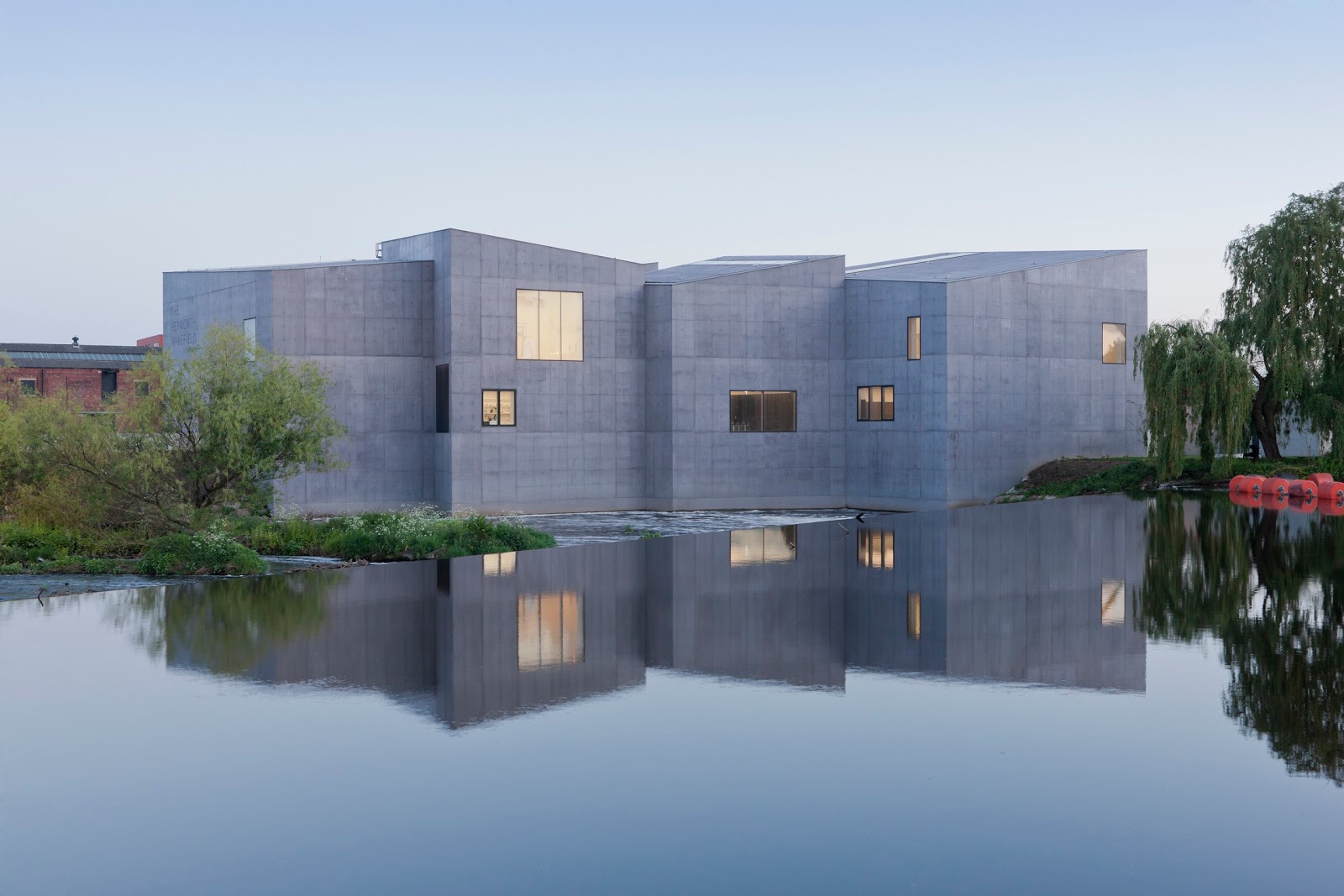
Opened in 2011, The Hepworth Wakefield was designed by David Chipperfield Architects and sits dramatically on the banks of the River Calder. Named after Dame Barbara Hepworth, who was born in Wakefield in 1903, the gallery houses a significant collection of her work alongside an ambitious programme of temporary exhibitions.
The building itself is a striking composition of angular concrete forms that seem to echo the shapes found in Hepworth's sculptures. Inside, the Hepworth Family Gift includes a remarkable group of the artist's working models, prototypes, and carvings that chart her creative process. Temporary exhibitions have featured artists ranging from Anthea Hamilton to Bridget Riley.
The gallery's riverside garden, landscaped by Tom Stuart-Smith, provides a contemplative outdoor space with further sculptural installations. It is a fitting tribute to an artist who always emphasised the relationship between sculpture and landscape.
Yorkshire Sculpture Park: Art in the Open Air
Seven miles south of Wakefield, the Yorkshire Sculpture Park (YSP) occupies 500 acres of the historic Bretton Estate. Founded in 1977, it was the first sculpture park in the UK and remains one of the finest anywhere in the world.
The open-air collection is anchored by major works from Henry Moore and Barbara Hepworth, whose bronzes are scattered across rolling parkland with views stretching to the Pennine hills. Moore's large-scale bronzes look utterly at home in this pastoral setting, their organic forms seeming to grow from the Yorkshire landscape.
Beyond the permanent works, YSP hosts ambitious temporary exhibitions both outdoors and within its five indoor galleries. The Underground Gallery, carved into the hillside, provides a unique setting for large-scale installations. Past exhibitions have included major surveys of work by Ai Weiwei, KAWS, and Damien Hirst.
Parking at the park is free, though general admission is charged. You could easily spend an entire day here, walking between sculptures, exploring the galleries, and pausing at the cafe overlooking the lower lake.
The Brontes and the Literary Moors
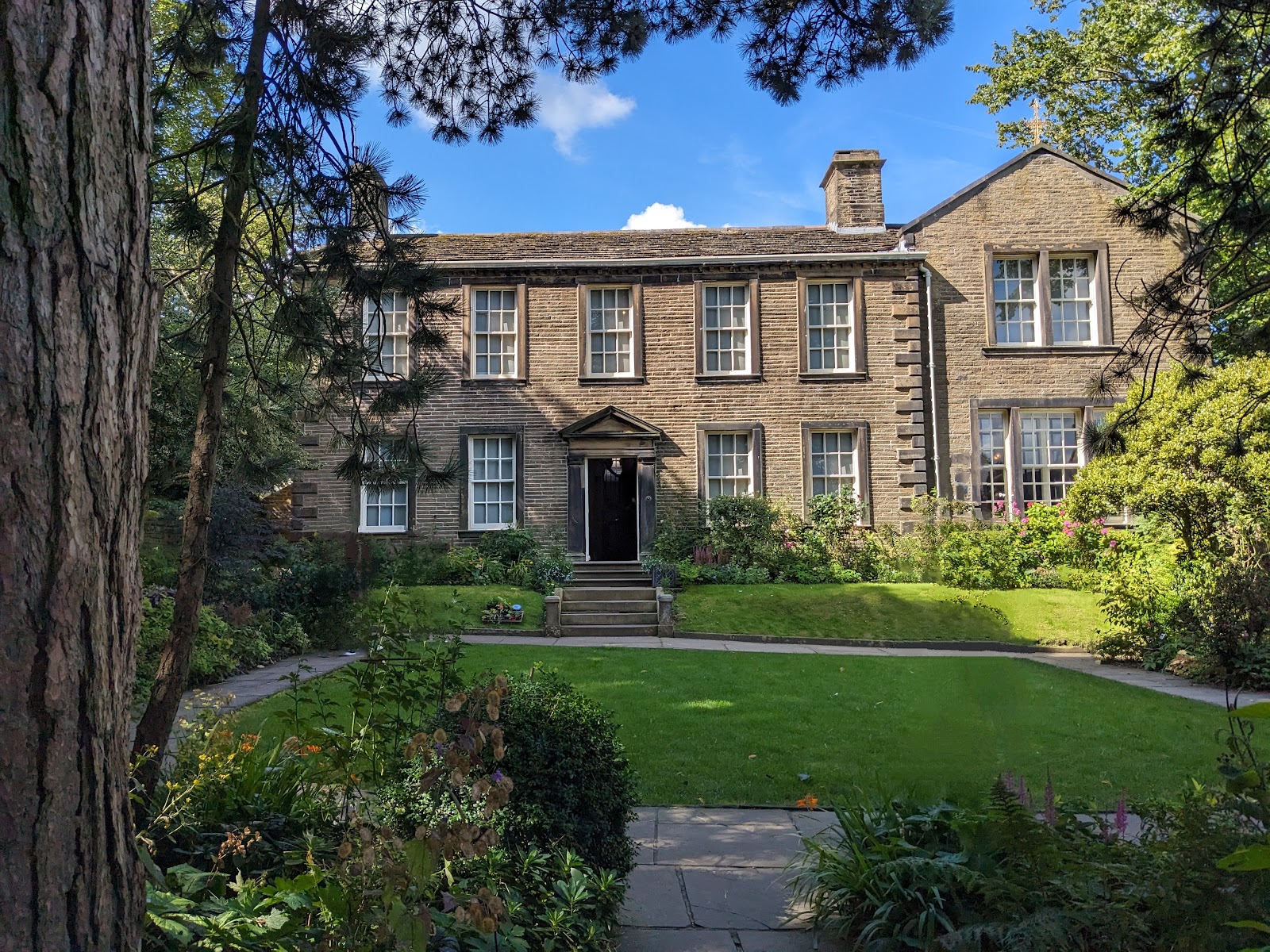
Few literary landscapes are as evocative as the moorland above Haworth, where the Bronte sisters wrote some of the most powerful novels in the English language. The Bronte Parsonage Museum, their family home from 1820 to 1861, sits at the top of the village's steep cobbled Main Street, next to the church where their father Patrick served as perpetual curate.
The museum preserves the rooms where Charlotte wrote Jane Eyre, Emily wrote Wuthering Heights, and Anne wrote The Tenant of Wildfell Hall. The dining room, where the sisters would walk in circles reading their work aloud to each other, remains particularly atmospheric. Personal belongings on display include Charlotte's writing desk, Emily's portable writing slope, and samples of the tiny books the children created as part of their elaborate imaginary worlds.
Beyond the parsonage, the moors themselves are an essential part of the experience. A walk to Top Withens, the ruined farmhouse traditionally (if somewhat fancifully) associated with Wuthering Heights, takes you across the same landscape of heather, peat, and wind that permeates the sisters' fiction. The route passes the Bronte Waterfall and Bronte Bridge, favourite destinations of the family.
Leeds: A City of Galleries
Leeds has quietly assembled one of the strongest concentrations of visual art venues in northern England. Leeds Art Gallery, housed in a handsome Victorian building on The Headrow, holds an outstanding collection of 20th-century British art, including important works by Henry Moore (born in Castleford, who studied in Leeds), Barbara Hepworth, Francis Bacon, and Bridget Riley. The gallery's collection of British watercolours is also notable.
Next door, the Henry Moore Institute focuses on sculpture in all its forms. Run by the Henry Moore Foundation, it hosts thought-provoking exhibitions that examine the history and practice of three-dimensional art. The institute also holds an extensive research library and an archive of sculptors' papers, making it a vital resource for anyone with a serious interest in the subject.
Down at Leeds Dock, the Royal Armouries Museum tells the story of arms and armour across five themed galleries. While it might seem an unusual inclusion in an arts and culture guide, the craftsmanship on display is extraordinary. Medieval suits of armour, Mughal helmets inlaid with gold, and samurai swords demonstrate that the decorative arts have always flourished even in the most martial of contexts. Admission is free.
Salts Mill, Saltaire: Industrial Heritage Meets Art
The UNESCO World Heritage Site of Saltaire, just north of Bradford, offers a remarkable fusion of industrial history and contemporary art. Salts Mill, the vast textile mill built by Sir Titus Salt in 1853, now houses the 1853 Gallery, which holds the largest permanent collection of work by Bradford-born artist David Hockney.
Hockney's vibrant paintings of the Yorkshire landscape, created during his return to the county in the 2000s, are displayed in the mill's airy upper floors alongside earlier works spanning his career. The building also houses independent bookshops, design shops, and a cafe, making it a destination that combines culture with leisurely browsing. Saltaire village itself, with its Italianate architecture built to house Salt's workers, is worth exploring in its own right.
Theatre in Yorkshire: From Scarborough to Sheffield
Yorkshire's theatrical tradition runs deep. The Stephen Joseph Theatre in Scarborough holds a special place in British drama as the home of Sir Alan Ayckbourn, who premiered over 80 of his plays at the venue. The theatre, housed in a former Odeon cinema on Westborough, operates both a theatre in the round and a traditional end-stage space, and its programme mixes new writing with revivals.
Scarborough's connection to Ayckbourn is just one thread in Yorkshire's rich theatrical tapestry. Leeds, Sheffield, and York all have thriving theatre scenes, with venues ranging from the grand Victorian Leeds Grand Theatre to the innovative studio spaces that host the region's many fringe companies.
Planning Your Cultural Tour
Yorkshire's cultural highlights are spread across the county, but the transport links are generally good. York and Leeds are both well served by rail, and the Yorkshire Sculpture Park and Hepworth Wakefield are within easy reach of Wakefield Westgate station. Haworth is accessible by bus from Keighley, which is on the main rail line from Leeds to Skipton. The Keighley and Worth Valley Railway, a heritage steam line, also runs to Haworth and is a memorable way to arrive.
Many of Yorkshire's best cultural venues are free to enter, including Leeds Art Gallery, the Henry Moore Institute, the Royal Armouries, and the Yorkshire Sculpture Park grounds. Even where there is an admission charge, such as at the Bronte Parsonage Museum and York Minster, the experience is well worth the cost.
Yorkshire's arts and culture scene is not a static museum piece. It is a living, evolving landscape where medieval craftsmanship sits alongside contemporary innovation, and where the landscapes that inspired the Brontes continue to inspire new generations of artists, writers, and makers.