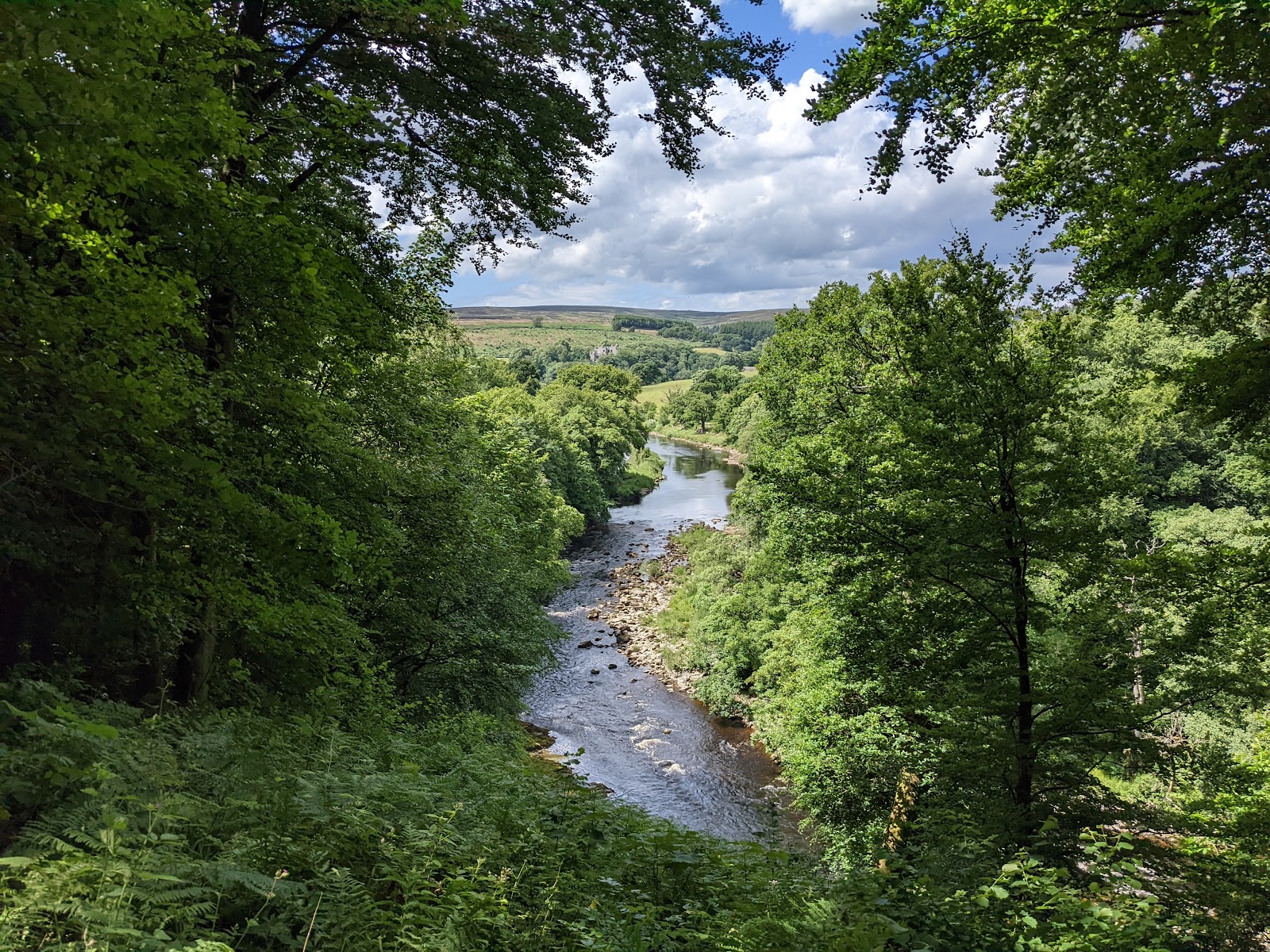
Yorkshire Shakes Off Winter
Spring arrives in Yorkshire not all at once but in stages, creeping up the valleys and over the hilltops across March, April and May. First come the snowdrops in sheltered churchyards. Then the daffodils along river banks and through parkland. By late April, the bluebells carpet ancient woodlands in a haze of violet-blue.
But spring here is more than wildflowers. It's curlews returning to the moors, newborn lambs finding their legs in Dales meadows, and the particular quality of light when low spring sunshine illuminates limestone cliffs and rushing waterfalls. This guide covers the best of Yorkshire between March and May -- the walks, the wildlife, the gardens, and the places to eat and drink.
Bluebell Woodlands Worth the Walk
Yorkshire's ancient woodlands harbour some of England's finest bluebell displays, typically peaking in late April to mid-May depending on the weather. Timing your visit right rewards you with one of nature's great spectacles.
Hardcastle Crags
The National Trust's Hardcastle Crags estate near Hebden Bridge is one of West Yorkshire's treasures. This deep, wooded valley along Hebden Water comes alive in spring with bluebells spreading beneath the beech and oak canopy. The main path follows the stream for about a mile and a half to Gibson Mill, a cotton mill built around 1800 that now runs entirely on sustainable energy.
The walk is easy to moderate, suitable for families, and the valley setting means you're sheltered from wind even on blustery spring days. The bluebells tend to be at their best in the last week of April and the first two weeks of May, though this varies year to year. Arrive early on weekends -- the car park at Midgehole fills quickly during peak bluebell season.
Hebden Bridge itself is worth exploring after your walk. This characterful market town, wedged into the steep Calder Valley, has reinvented itself as a hub for independent shops, cafes, and creative businesses. The Watergate Tea Rooms beside the canal do an excellent cream tea.
Strid Wood at Bolton Abbey
The ancient oakwood at Bolton Abbey estate is designated a Site of Special Scientific Interest, and in spring you'll understand why. The combination of bluebells, wild garlic (ramsons), and wood anemones creates a multi-layered carpet of colour and scent that fills the valley. The riverside path through the wood is one of the most beautiful short walks in the Dales.
The estate charges for car parking, but the walks are included. Follow the Strid Wood nature trail (around two miles) for the best bluebell viewing, keeping an eye out for woodpeckers, nuthatches, and treecreepers in the canopy above. The Bolton Abbey ruins themselves look particularly romantic in spring light, framed by the fresh green of new foliage.
Waterfalls at Their Thundering Best
Spring snowmelt and April showers combine to make this the peak season for Yorkshire's waterfalls. Rivers and becks that may trickle in summer become dramatic torrents, and the sound of falling water fills the Dales valleys.
Aysgarth Falls
Aysgarth Falls in Wensleydale is a series of three broad limestone steps over which the River Ure tumbles in a spectacular display. The Upper, Middle, and Lower Falls are connected by a well-maintained woodland path that takes around an hour to walk in full. In spring, the volume of water transforms these from pretty cascades into genuinely powerful falls, and the surrounding woodland of ash and oak is fresh with new leaf.
The falls featured memorably in the film Robin Hood: Prince of Thieves, but the reality is far more impressive than anything on screen. The Yorkshire Dales National Park visitor centre at the falls car park provides useful context on the local geology and wildlife. Dippers -- charming round birds that walk underwater to feed -- are regularly spotted on the rocks below the falls.
Ingleton Waterfalls Trail
The Ingleton Waterfalls Trail is a four-and-a-half mile circuit that passes through two river valleys and visits a succession of waterfalls, the most impressive being Thornton Force, where water drops 14 metres over a limestone cliff. In spring, every waterfall along the route runs at full power, and the gorges echo with the roar of water.
The trail is privately managed and there is an admission charge payable at the entrance. The route involves some steps and can be muddy, so sturdy footwear is essential. Allow two to three hours for the full circuit. It's a genuinely rewarding walk at any time of year, but spring is when the falls are at their most dramatic and the surrounding woodland is at its freshest.
Janet's Foss
For something gentler, Janet's Foss near Malham is a single, elegant waterfall in a mossy grotto that feels like something from a fairy tale -- indeed, the name derives from the legend of a fairy queen who lived in a cave behind the falls. The short walk from Malham village takes around twenty minutes and is suitable for families. In spring, the tufa deposits around the falls are vivid green with new moss growth, and the surrounding woodland floor is carpeted with wild garlic.
Lambing Season: New Life in the Dales
Few things say "Yorkshire spring" quite like lambs in the fields. Lambing season runs from March to May, and the Dales are alive with woolly newcomers finding their feet and racing each other across meadows.
Cannon Hall Farm near Barnsley is one of Yorkshire's most popular family attractions, and their lambing season events are a highlight. Visitors can watch lambing in progress, bottle-feed orphan lambs, and meet other young farm animals. The farm shop sells meat and produce from the estate. It gets busy during school holidays, so weekday visits are advisable.
Many smaller Dales farms also welcome visitors during lambing by prior arrangement -- look for signs in village shops or check local tourism websites. Wherever you encounter lambs, remember that dogs must be kept on leads in fields with livestock. This is the law, and farmers have the right to shoot dogs that worry sheep.
Gardens Awakening
Fountains Abbey and Studley Royal
The National Trust's Fountains Abbey estate near Ripon is magnificent at any time, but spring brings it to life in a particular way. The formal water gardens of Studley Royal, designed in the eighteenth century, are framed by mature trees coming into fresh leaf, and the reflections in the Moon Ponds and canal are at their sharpest in the clear spring light.
The abbey ruins themselves -- the largest monastic ruins in the country -- stand in a sheltered valley where wild daffodils bloom in March and the surrounding meadows fill with wildflowers as spring progresses. Allow at least half a day to explore the full estate, which also includes a medieval deer park where fallow deer can be spotted grazing beneath ancient oaks.
RHS Garden Harlow Carr
The Royal Horticultural Society's northern showcase garden on the outskirts of Harrogate is designed to demonstrate what grows well in Yorkshire's climate, making it particularly relevant for local gardeners. Spring highlights include the alpine house, the streamside garden where moisture-loving plants flourish, and the kitchen garden where the growing season begins in earnest.
Bettys Tea Rooms operates a branch within the garden, making this a civilised spring outing that combines horticultural inspiration with excellent cake. The woodland garden walk is especially fine in April when the understorey is bright with spring flowers.
Coastal Spring: Seabirds and Sea Air
Bempton Cliffs
From late March onwards, the chalk cliffs at Bempton near Bridlington become one of the great wildlife spectacles of northern England. Over 500,000 seabirds return to breed on these towering cliffs, including gannets, guillemots, razorbills, kittiwakes, and -- the star attraction -- puffins. The puffins typically arrive in April and remain until July.
The RSPB reserve at Bempton has several well-fenced viewing platforms that bring you remarkably close to the nesting birds. Binoculars enhance the experience, but the birds are so numerous and so close that the naked eye suffices for an impressive show. Volunteer wardens are stationed along the cliff path and are wonderfully knowledgeable about what you're seeing.
The cliffs themselves are spectacular -- up to 120 metres high in places -- and the constant wheeling, diving, and calling of thousands of seabirds creates a sensory experience that's genuinely unforgettable. Spring is the best time to visit, when the breeding season is in full swing and the clifftop wildflowers add colour to the scene.
Whitby in Spring
Whitby begins to shake off its winter quiet from Easter onwards, offering a sweet spot before summer crowds arrive. The harbour is busy with fishing boats, crab pots stack on the quaysides, and the first outdoor diners brave the breeze for fish and chips with a sea view.
The Cleveland Way coastal path in either direction from Whitby is superb spring walking. Southwards towards Robin Hood's Bay, the path passes farmland where lapwings and skylarks are in full voice. Northwards towards Sandsend, the walk is easier and the beach provides an alternative route at low tide.
Brimham Rocks: A Spring Scramble
Brimham Rocks in Nidderdale is a collection of extraordinary natural rock formations sculpted by 320 million years of erosion. Managed by the National Trust, the shapes are fantastical -- balanced boulders, towering pillars, and formations nicknamed Idol Rock and Dancing Bear.
Spring is ideal: the heather moorland is greening up, skylarks sing overhead, and the views across Nidderdale to the distant Dales are crisp and clear. Children love scrambling over the rocks and discovering caves and overhangs. The terrain is uneven, so sensible footwear is important, but there's no set route -- the joy is in exploring freely.
Where to Eat: Spring Menus and Local Produce
Spring is when Yorkshire's food scene shifts gear. Menus feature the new season's ingredients -- spring lamb, wild garlic, forced rhubarb from the famous Rhubarb Triangle between Wakefield, Morley and Rothwell, and the first asparagus from the Vale of York.
The Hare Inn at Scawton, a small village near Helmsley, is now a fine dining restaurant serving seasonal food with real flair, making excellent use of local and foraged ingredients. For something more casual, the Dales towns' farm shops stock seasonal produce that makes superb picnic fare.
Practical Spring Tips
Yorkshire's spring weather is famously unpredictable. March can bring everything from warm sunshine to blizzards, sometimes in the same day. Layers remain essential, and waterproofs should be in your rucksack regardless of the forecast. April showers are no myth in these parts.
Walking boots rather than trainers are advisable for any countryside walk. Spring rain makes paths muddy, and the limestone terrain of the Dales can be slippery when wet. Carry sunscreen from April onwards -- the spring sun can be surprisingly strong at altitude.
Daylight extends rapidly through spring. By late March the clocks have gone forward, and by May you'll have light until after nine in the evening -- perfect for extended walks and long pub garden evenings.
Easter school holidays and the May bank holidays bring increased visitor numbers to popular sites. Early mornings and midweek visits are your best strategy for avoiding crowds. The DalesBus network resumes weekend services in spring, connecting towns and villages across the national park -- particularly useful for one-way walks.
The Promise of Longer Days
Spring in Yorkshire carries a particular sense of anticipation. Each week brings visible change -- new leaves unfurling, more birdsong, longer evenings that invite you to linger outdoors.
Spring has distinct pleasures that summer cannot replicate. The waterfalls are bigger. The wildflower displays are at their peak. The lambs are at their most comically endearing. And there's a freshness to the air and light that makes familiar landscapes feel newly revealed.
Yorkshire rewards visitors in every season, but there's a strong case that spring is the finest time of all. The land is generous, the welcome is warm, and the days are growing longer.
Sources & Useful Links
- Hardcastle Crags - National Trust - Walking trails, bluebell updates and Gibson Mill visitor information
- Bolton Abbey Estate - Strid Wood nature trail, parking and seasonal event listings
- Ingleton Waterfalls Trail - Trail map, admission prices and walking conditions
- Fountains Abbey & Studley Royal - National Trust - UNESCO World Heritage Site with abbey ruins and Georgian water gardens
- RHS Garden Harlow Carr - Spring planting highlights and events at the RHS northern showcase garden
- RSPB Bempton Cliffs - Seabird colony viewing platforms and puffin arrival updates
- Brimham Rocks - National Trust - Access information and walking routes around the rock formations
- Cannon Hall Farm - Lambing season events, family attractions and farm shop details
- Yorkshire Dales National Park - Walking guides, waterfall locations and visitor centre information
- Welcome to Yorkshire - Regional tourism board with seasonal event listings and accommodation